


 |
|
|
||
|
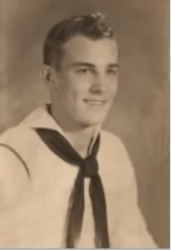
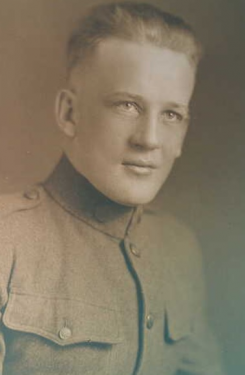
DARWIN LAWRENCE CLARK |
||||
|
Engagements: • World War II (1941 - 1945) |
||||
| Biography: | ||||
|
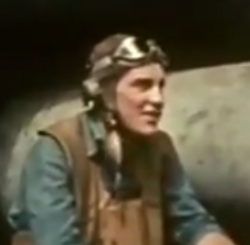
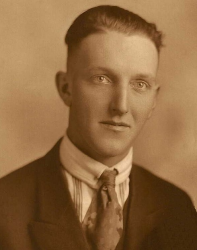
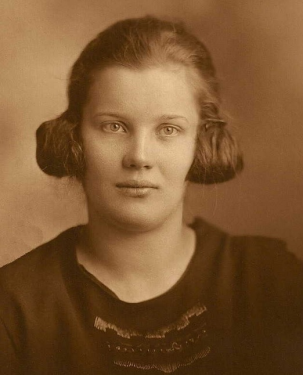
Darwin Lawrence Clark Aviation Radioman Second Class, United States Navy Distinguished Flying Cross & Purple Heart Darwin was the eldest child born to Lawrence Rex Clark and Leone Thelma Rasmussen who married in Woodbury County, Iowa on 23 Dec 1920. His siblings were Darlene Lavonne, son Carroll Doyle, son Dorrance Dean, and daughter Dovonne D. Clark. Darwin's uncle, Clarence Raun Rasmussen served in WWI (MHOH#318123). After completing High School, Darwin L. Clark received his father's permission to enlist in the US Navy (NSN:32-42-11) in Des Moines, IA on 7 May 1940 as an Apprentice Seaman (AS). AS Clark completed his basic training at the Naval Training Station (NTS), Great Lakes, IL by early July 1940 then reported to the Naval Air Station (NAS) San Diego on 27 July 1940 to attend the aviation radioman trade school. Clark, while assigned to NAS San Diego, advanced in rate to Seaman Second Class (S2/c) on 7 Sep 1940. Upon completion of his schooling, Clark reported onboard the oiler USS Platt (AO-24) in San Diego on 29 Nov 1940 as a passenger enroute from NAS San Diego to Comdr Utility Sqd One (VJ-1) in Hawaii. Platte sailed on 7 Dec 1940 and arrived at Pearl Harbor on 16 Dec 1940. S2c Clark reported the same day to (VJ-1) (USS Rigel) for duty. Clark was advanced in rate to Seaman First Class (S1c) before 31 Mar 1941, and then on 01 Jun 1941, he was advanced in rate to Radioman Third Class (RM3). On 13 Oct 1941, RM3 Clark detached from VJ-1 in Pearl Harbor and transferred to NAS Norfolk, VA for duty with Torpedo Squadron Eight (VT-8). He boarded the cargo ship USS Wharton (AP-7) as a passenger on 13 Oct 1941 in Pearl Harbor. On 20 Oct 1941, Wharton docked in San Francisco where RM3 Clark disembarked and continued his travels to his assignment with VT-8 in Norfolk, VA. VT-8 was assigned to the new aircraft carrier, USS Hornet (CV-8), commissioned on 20 October 1941. For the next four months, VT-8 and Hornet conducted extensive training in the Atlantic and Caribbean areas. In early March 1942, Hornet was transferred to the Pacific via the Panama Canal where she participated in the Doolittle raid on Tokyo on 18 April 1942. Hornet along with the USS Enterprise (CV-6) were ordered to support the USS Lexington (CV-2) and USS Yorktown (CV-5) during the battle of the Coral Sea in early May 1942. However, the battle was over before they reached the area. Hornet returned to Pearl Harbor in late May and ordered to support impeding combat operations near Midway. Sometime during the preceding few months Clark was promoted to Aviation Radioman Second Class (ARM2). Early on the morning of 4 Jun 1942, Ensign Henry R. Kenyon, Jr., a pilot, and his radioman/gunner, ARM2 Darwin L. Clark, and the rest of the 14 aircraft of VT-8 in company with 44 strike aircraft of the Hornet Air Group, launched to engage the enemy Japanese Striking Force approaching the Midway Atoll. After a long flight westward, the Hornet Air Group had not made contact with the enemy force. VT-8’s commanding officer, Lcdr John Waldron, decided he knew where the enemy force was. Guided by his own instinct and training, but against orders to remain with the group from the Air Group leader, Cdr Stanhope Ring, Lcdr Waldron and VT-8 broke away and headed southwest. A short time later VT-8 found the enemy ships and courageously attacked without friendly fighter support. Overwhelmed by superior numbers of Japanese fighters, yet undaunted, VT-8 pressed home their attack until all 15 planes were shot down. Only one airman survived, Ens. George Gay. The USS Hornet's (CV-8) Midway Battle After Action Report dated June 13,1942 listed ARM2 Darwin L. Clark and his pilot, Ens. Henry Russell "Rusty" Kenyon, Jr. as "Missing In Action." Their remains were unrecoverable. They were listed as "presumed dead" on 5 Jun 1943. In the same report, Rear Admiral (Select) M. Mitscher, CO of Hornet, recommended all the downed flight crews of VT-8 for the Congressional Medal of Honor. Petty Officer Clark was awarded (posthumously) the Distinguished Flying Cross, Purple Heart, the Presidential Unit Citation ribbon American Defense Service Medal, American Campaign Medal, Asiatic-Pacific Campaign Medal with one bronze battle star, and the World War II Victory Medal. --------------------------------------- The President of the United States of America takes pride in presenting the Distinguished Flying Cross (Posthumously) to Darwin Lawrence Clark, Aviation Radioman Second Class, United States Navy, for heroism and extraordinary achievement while participating in an aerial flight as radioman and free machine gunner of a carrier-based Navy Torpedo Plane of Torpedo Squadron EIGHT, attached to the U.S.S. HORNET, during an attack against enemy Japanese forces in the "Air Battle of Midway," on 4 June 1942. Grimly aware of the hazardous consequences of flying without fighter protection, and with insufficient fuel to return to his carrier, Aviation Radioman Second Class Clark resolutely, and with no thought of his own life, pressed home his attack with utter disregard for his own personal safety and in the face of tremendous anti-aircraft barrage and overwhelming fighter opposition. His gallant spirit of self-sacrifice and his conscientious devotion to the fulfillment of a vastly important mission contributed materially to the success of our forces and were in keeping with the highest traditions of the United States Naval Service. ------------------------------------------ The Presidential Unit Citation awarded to VT-8 reads: For extremely heroic and courageous performance in combat during the Air Battle of Midway, June 4, 1942. Flying low without fighter support, Torpedo Squadron EIGHT began the perilous mission, Intercept and attack! First to sight the enemy, the squadron attacked with full striking power against crushing enemy opposition, scoring torpedo hits on Japanese forces. Realizing to a man that insufficient fuel would prevent a return to the carrier, the pilots held doggedly to the target, dropping torpedoes at point-blank range in the face of blasting antiaircraft fire that sent the planes one by one, hurtling aflame in the sea. The loss of 29 lives, typifying valor, loyalty, and determination, was the price paid for Torpedo Squadron EIGHTs vital contribution to the eventual success of our forces in this epic battle of the air. ----------------------------------------- His family also received a commemoration in honor of Darwin's sacrifice from President Franklin D. Roosevelt. It reads: In grateful memory of Darwin Lawrence Clark, who died in the service of his country, SEA, Pacific Area, ATTACHED U.S.S. HORNET, 5 JUNE 1943 (Presumed). He stands in the unbroken line of patriots who have dared to die that freedom might live and grow and increase its blessings. Freedom lives, and through it, he lives -- in a way that humbles the undertakings of most men.(Signed) Franklin D. Roosevelt, President of the United States of America ---------------------------------------- 4 Jun 1943 Decoration of all members of the famous torpedo Squadron Eight which launched from the USS Hornet to battle a Japanese task force in the battle of Midway was announced by the navy. All planes in the unit which was given a group citation by President Roosevelt were shot down. Decorations for the the 29 officers and men aboard the 15 planes of the squadron included Navy Crosses for the pilots and the Distinguished Flying Cross for crew members. The pilots, all listed as missing, included Lcdr. John Charles Waldron, Fort Pierre, S.D. The radiomen gunners all listed as missing who were awarded the distinguished flying cross included Max A. Calkins, Wymore, Neb., and Darwin L. Clark, Rodney, Iowa. (Calkins is the son of Mr. and Mrs. W.W. Calkins, 417 South 11th street, Wymore). ----------------------------------------- Task Force 16 Citation Recognizing its contribution to the Doolittle Raid, 18 April 1942 On the occasion of the 50th anniversary of the Second World War, it is appropriate that we take time to reflect on the unique and daring accomplishments achieved early in the war by Task Force 16. Sailing westward under sealed orders in April 1942, only four months after the devastating raid on Pearl Harbor, Task Force 16, carrying sixteen Army B-25 bombers, proceeded into history. Facing adverse weather and under constant threat of discovery before bombers could be launched to strike the Japanese homeland, the crews of the ships and LTC Doolittle's bombers persevered. On 18 April 1942 at 14:45, perseverance produced success as radio broadcasts from Japan confirmed the success of the raids. These raids were an enormous boost to the morale of the American people in those early and dark days of the war and a harbinger of the future for the Japanese High Command that had so foolishly awakened "The Sleeping Giant." These exploits, which so inspired the service men and women and the nation live on today and are remembered when the necessity of success against all odds is required. (Signed) John H.Dalton Secretary of the Navy 15 May 1995 ----------------------------- Combat Action Ribbon (CAR) note: None of the Navy/Marine flight crews in the Battle of Midway were eligible for or were awarded the Combat Action Ribbon (CR). See Navy and Marine Corps Awards Manual (SECNAVINST M-1650.1 of 16 Aug 2019, Appendix 2C.1.c (3) Amplifying Guidance). It reads in part, “The CR will not be awarded in connection with aerial flight, . . . “ The CR was established in 1969 and made retroactive to 07 Dec 1941. According to the Awards Manual, when deemed appropriate, the award for aerial combat was/is the Air Medal. Bio #89 composed by Gerry Lawton (GML470) |
||||
| Honoree ID: 89872 | Created by: MHOH | |||
Ribbons
Medals
Badges
Honoree Photos
|  |  |
 |  |
 |